Medically reviewed by
If a routine prescription has ever made you wince at the pharmacy counter, you're not alone, and importing medication from Canada is a legitimate, well-regulated way to close that price gap. Under the FDA's enforcement discretion, U.S. residents can bring in up to a 90-day supply of prescription or over-the-counter drugs approved by Health Canada, so you can get the treatment you need without settling for less. Here's what this guide covers:
U.S. legal framework and FDA personal importation policy
Verification of legitimate Canadian pharmacies
Step-by-step ordering and customs compliance
Price controls and comparative savings
Quality assurance measures from Health Canada and PlanetDrugsDirect
U.S. customs rules and documentation
Emerging state programs and future importation outlook
Follow these rules and safety checks and you can order through trusted Canadian pharmacies with confidence, while still seeing real savings along the way.
Is It Legal to Import Prescription Drugs from Canada for Personal Use?
Yes. Under the FDA's personal importation policy, U.S. residents can bring in a 90-day supply of prescription drugs for their own use through enforcement discretion, which opens the door to affordable treatment when U.S. options are out of reach or simply too expensive. That allowance only applies when specific criteria are met, though, so patients need and safety have to line up together.
Federal law technically prohibits importation, but the FDA chooses not to enforce that rule when every personal importation condition is satisfied. That discretion covers only unapproved drugs treating serious conditions that aren't commercially available in the U.S., pose no unreasonable risk, come with a personal use affirmation, and stay within a 90-day supply. The framework has its nuances, but in practice it turns what looks like a restricted import into a dependable way to save money.
Even so, personal importation is never a guarantee: FDA and Customs and Border Protection officers can still inspect or hold shipments at their discretion. Knowing these rules ahead of time is the best starting point for confirming a pharmacy's legitimacy and moving through the process with confidence.
What Does the FDA Personal Importation Policy Allow?
The FDA's Personal Importation Policy allows limited imports, putting patient safety and documented need first. To qualify, the medication must treat a serious condition, have no U.S. equivalent, carry no unreasonable risk, come with a personal use affirmation, and stay within a 90-day supply.
Key policy elements:
Serious Condition: Drug treats a serious or life-threatening illness
No U.S. Option: No commercially marketed equivalent in the U.S.
Risk Assessment: Drug poses no unreasonable health hazard
Personal Use: Written statement confirming non-commercial intent
Quantity Limit: Maximum 90-day supply per shipment
What Are the Limits on Quantity and Medication Types?
To prevent diversion and confirm the medication is truly for personal use, the importation allowance caps shipments at a 90-day supply. Controlled substances face closer DEA oversight and may call for extra documentation.
Quantity and type limits:
Maximum Supply: 90 days per prescription
Controlled Substances: Subject to DEA import restrictions
OTC Medications: Generally allowed in personal quantities
Injectable and Narcotic Drugs: Not covered under enforcement discretion
How Does DEA Regulation Affect Controlled Substance Imports?
The DEA holds controlled substances to a stricter standard, requiring valid U.S. registration or import permits that go beyond what the FDA asks for non-controlled drugs. Without DEA approval, a personal import of a controlled medication can be denied outright.
DEA requirements include:
Import Permit: Valid U.S. DEA import authorization for Schedule II–V
Documentation: Original prescription and physician’s justification
Shipment Inspection: DEA review at U.S. ports of entry
What Are State-Led Importation Programs Like Section 804?
Section 804 importation programs let individual states legally import certain prescription drugs from Canada under FDA-approved plans, cutting costs for public health programs. Florida's program, launched in January 2024, shows just how much money is on the table.
Program features:
State Plan Approval: FDA authorization for specific drug lists
Wholesale Channels: State-approved distributors purchase Canadian drugs
Savings Projections: Estimated $150 million in year one for Florida
Expansion: Other states drafting Section 804 proposals
How Can You Verify Legitimate Canadian Online Pharmacies?
Verifying a Canadian online pharmacy comes down to checking for recognized certifications, regulatory approvals, and transparent business practices, the things that confirm a pharmacy is authentic and safe. Taking this step lowers your risk of counterfeit medication and protects your health.
Legitimate pharmacies follow national standards, require valid prescriptions, keep a real physical address, and take part in certification programs. Knowing what to look for helps you avoid scams, confirm where your medication truly comes from, and order with peace of mind.
What Certifications and Approvals Should You Look For?
Certification | Regulatory Body | Significance |
CIPA Membership | Canadian International Pharmacy Association | Ensures pharmacy adherence to best practices and verification protocols |
NAPRA License | National Association of Pharmacy Regulatory Authorities | Confirms provincial licensing and legal operation |
Health Canada Drug Approval | Health Canada | Verifies drug products meet stringent safety and efficacy criteria |
.Pharmacy Verified Seal | National Association of Boards of Pharmacy | Indicates global pharmacy safety program accreditation |
How to Identify Red Flags and Avoid Fake Pharmacies?
Be wary of any online pharmacy offering steep discounts without asking for a prescription, or selling unregulated products. Fraudulent vendors often hide their contact details, sell unapproved drugs, or leave out licensing information altogether.
Common red flags include:
No Prescription Requirement: Pharmacy sells prescription-only drugs without valid prescriptions
Unverified Contact Info: Missing Canadian address or telephone number
Unrealistic Pricing: Discounts exceeding 90 percent off typical Canadian prices
Poor Website Security: Absence of privacy policies and secure checkout processes
How Does Health Canada Regulate Drug Safety?
Health Canada oversees drug licensing, monitors medications after they reach the market, and inspects manufacturing facilities to make sure Canadian medications meet international safety benchmarks. Its approval process is every bit as rigorous as the FDA's.
Health Canada’s regulatory steps:
Pre-market Review: Scientific evaluation of drug safety, efficacy, and quality
Manufacturing Inspection: Facility audits to confirm Good Manufacturing Practices
Post-market Monitoring: Adverse event reporting and recall procedures
Which Canadian Pharmacies Are Trusted for US Consumers?
Trusted Canadian pharmacies operate transparently, meet CIPA and NAPRA requirements, and make it easy to submit a prescription. Look for a track record of reliable shipping, responsive customer support, and verified quality checks.
Examples of reputable characteristics:
Prescription Verification: Pharmacist review before dispensing
Physical Presence: Canadian-based warehouse and customer service center
Quality Assurance: Batch testing and tamper-evident packaging
Customer Reviews: Positive feedback on on-time delivery and authenticity
What Is the Step-by-Step Process to Order and Import Canadian Medications?
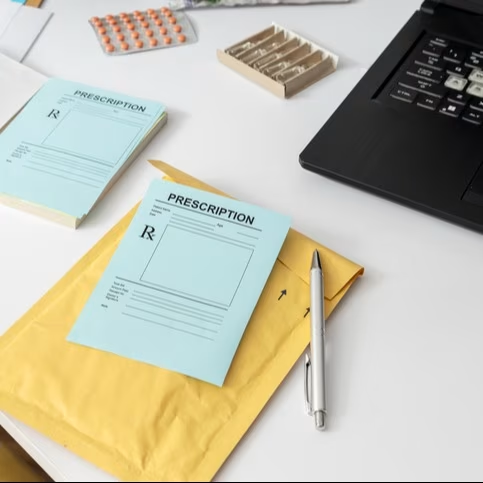
Ordering across the border is more straightforward once you know the sequence: get a prescription, prepare your documents, arrange shipping, and keep track of your 90-day supply. Working through each step in order helps you avoid delays and stay compliant.
Obtain a Valid Prescription
Submit Documents to Pharmacy
Place and Pay for Order
Prepare Customs Documentation
Track Shipment and Manage Supply
Stick to these steps and your medication is far more likely to clear the border smoothly and reach you on schedule.
How to Obtain a Valid Prescription for Canadian Pharmacies?
Canadian pharmacies need a prescription from a licensed healthcare provider. A handwritten or electronic prescription from your U.S. doctor is generally accepted, and a telemedicine consultation with a Canadian physician can speed things along if needed.
Prescription sources:
U.S. Physician: Written or e-prescription sent to pharmacy
Canadian Telehealth: Virtual visit and local prescription issuance
Prescription Transfer: Original fill authorization from a U.S. pharmacy
What Documentation Is Needed for Customs and Shipping?
Clearing customs takes clear documentation that proves your medication is for personal use and confirms it's authentic. A few essential documents should travel with every shipment to satisfy CBP and FDA inspection requirements.
Required paperwork:
Doctor’s Letter: Affirms serious condition and personal use
Prescription Copy: Legitimate provider’s prescription details
Pharmacy Invoice: Product description, quantity, and strength
Packing Slip: Transparent listing of contents and values
How to Manage Shipping, Delivery, and 90-Day Supply Limits?
Choosing a reliable shipping service and timing deliveries within the 90-day window keeps you compliant with personal importation rules. Tracking your shipment and staying in touch with customs authorities helps you steer clear of surprises.
Shipping best practices:
Insured Carriers: Protect against loss or damage
Signature Required: Confirms personal receipt
Shipment Tracking: Monitors progress across borders
Calendar Reminders: Align deliveries with 90-day supply windows
What Are Common Challenges and How to Overcome Them?
Customs inspections, communication gaps, and procedural mix-ups can all slow down delivery. A little proactive preparation and clear documentation go a long way toward avoiding these obstacles.
Common challenges and solutions:
Customs Delays: Pre-submit documentation and courier assistance
Prescription Issues: Verify prescription format and validity beforehand
Communication Barriers: Maintain direct pharmacy contact channels
Supply Interruptions: Order refills at least two weeks before depletion
Why Are Canadian Drugs Cheaper Than US Medications?
Canada's price controls keep a lid on manufacturer markups and promote equitable access, which is why retail costs run 50 to 90 percent lower than in the U.S. Under this government-led approach to pricing, residents pay for reasonable production and distribution costs and nothing more.
Once you see how these regulatory differences work, the cross-border savings make a lot more sense, and it's easy to understand why personal importation appeals to so many people.
How Do Canadian Price Controls Affect Drug Costs?
Canada negotiates maximum prices for patented drugs by comparing them against international benchmarks and weighing their therapeutic benefit. This keeps manufacturer profits in check and drug costs predictable.
Key control mechanisms:
Patented Medicine Prices Review Board: Caps prices using comparator countries
Bulk Purchasing: Provincial plans negotiate volume discounts
Reimbursement Policies: Public drug plans set formulary rates
What Are Typical Price Comparisons Between US and Canadian Drugs?
Line up common medications side by side and the savings are dramatic: U.S. prices are often two to three times higher than Canadian prices for the exact same dosage form.
Medication | U.S. Price (30 days) | Canadian Price (30 days) | Savings (%) |
Atorvastatin 20 mg | $250 | $45 | 82 % |
Lisinopril 10 mg | $120 | $15 | 88 % |
Metformin 500 mg | $90 | $12 | 87 % |
How Do Generic and Brand-Name Drugs Compare in Canada?
Both generic and brand-name drugs benefit from Canada's price controls, though generics tend to be discounted further thanks to market competition. Brand-name drugs still stay competitively priced, since regulated markups keep them in check.
Generic versus brand-name distinctions:
Generic Equivalents: Market competition drives prices lower
Brand Maintenance: Price caps prevent significant premiums
Formulary Inclusion: Public plans favor cost-effective generics
What Are Real Savings Stories from Personal Importation?
Many U.S. residents report saving $300 to $500 a month on essential medications, which eases financial pressure and makes it easier to stay on treatment. Their experiences show just how real the impact of cross-border imports can be on everyday well-being.
Illustrative savings examples:
Insulin Costs: Reduced from $450 to $120 per month
Arthritis Medications: Monthly savings of $380 on biologics
Mental Health Therapies: Sertraline savings of $70 per month
How Can You Ensure the Safety and Quality of Imported Canadian Drugs?
Confirming a medication is authentic takes more than one safeguard: Health Canada, certified pharmacies, and PlanetDrugsDirect's own internal protocols all play a part. Together, these layers of verification protect patients from counterfeit or substandard products.
When regulatory oversight and pharmacy best practices work together, they form a strong safety net that protects a drug's integrity all the way from the manufacturer to your door.
How Does PlanetDrugsDirect Ensure Authenticity and Quality?
PlanetDrugsDirect takes quality assurance seriously, relying on batch testing, tamper-evident packaging, and third-party lab verification to confirm every product's integrity.
Key quality controls:
Batch Testing: Independent laboratory assays for active ingredients
Tamper-Evident Seals: Visual assurance of sterile packaging
Cold-Chain Monitoring: Temperature-controlled logistics for heat-sensitive drugs
Compliance Audits: Regular pharmacy partner evaluations
What Are the Risks of Counterfeit Drugs and How to Avoid Them?
Counterfeit medications can be dangerous, since incorrect ingredients or dosages put your health at risk. The WHO estimates that 10 percent of medicines worldwide are counterfeit, which is exactly why sourcing from verified pharmacies matters so much.
Risk mitigation strategies:
Certified Pharmacies: CIPA and NAPRA membership ensures legitimacy
Visual Inspection: Verify packaging integrity and labeling accuracy
Batch Number Confirmation: Cross-check with manufacturer records
Adverse Event Reporting: Promptly report any irregularities to regulatory bodies
How Does Health Canada’s Approval Process Protect Consumers?
Health Canada evaluates drugs before they reach the market, inspects manufacturing facilities, and keeps up ongoing surveillance afterward, holding every medication to rigorous safety and efficacy standards throughout its life on the shelf.
Approval safeguards include:
Clinical Data Review: Assessment of trial results and safety profiles
Good Manufacturing Practices: Facility inspections to ensure quality
Post-Approval Monitoring: Adverse event reporting systems and recall authority
What Should You Do If You Have Concerns About Your Medication?
If something feels off, whether it's an unexpected side effect or a concern about the product itself, contact your pharmacy right away, report it to Health Canada's adverse event program, and check in with your healthcare provider.
Recommended actions:
Notify Pharmacy: Document symptoms and batch details
Consult Healthcare Provider: Review treatment adjustments
Report to Regulators: Submit reports to Health Canada and FDA MedWatch
What Are the US Customs Rules for Importing Medication from Canada?
U.S. Customs and Border Protection applies FDA and DEA guidelines when reviewing personal drug imports, and that review is discretionary. Knowing these rules ahead of time makes it clear what documentation you'll need and what risks a shipment might face.
When your paperwork is in order, legally approved shipments tend to clear inspection smoothly and reach you without delay.
What Are the FDA and CBP Guidelines for Personal Drug Imports?
The FDA and CBP allow personal use shipments through enforcement discretion, but only under strict criteria built around patient safety and non-commercial intent.
Key guidelines include:
Quantity Limit: 90-day supply per prescription
Prescription Documentation: Written prescription and doctor’s letter
FDA-Approved Products: Preference for Health Canada–approved drugs
CBP Inspection: Potential package review upon entry
How Are Controlled Substances Treated at the Border?
Controlled substances need additional DEA import permits, and without proper authorization, they can face stricter inspection or be denied entry altogether.
Treatment protocols:
DEA Permit: Mandatory for Schedule II–V drugs
Documentation Check: DEA import permit alongside prescription
Border Inspection: Detailed evaluation of controlled shipments
What Documentation Helps Smooth Customs Clearance?
Complete, accurate paperwork speeds up customs review and cuts down on delays. The right documents make your personal use intent and medical necessity clear from the start.
Critical clearance documents:
Prescription and Doctor’s Letter: Confirm personal medical need
Pharmacy Invoice: Itemized list of medications, quantities, and strengths
Packing Slip: Clear description of contents and declared values
Identification: Government-issued ID matching recipient details
What Happens If Medications Are Seized or Delayed?
If a shipment gets held up or seized, contact your pharmacy right away to double-check your documentation and, if needed, request a re-submission or file an appeal.
Response steps:
Pharmacy Coordination: Confirm paperwork and resubmit if needed
Customs Inquiry: Provide additional documentation on request
Patient Notification: Adjust supply management to prevent gaps
Appeal Process: Submit formal petition for release of detained items
What Is the Future Outlook for Legal Drug Importation from Canada?
New policy developments and state-led programs point toward more importation pathways ahead, ones that could bring U.S. drug costs down further while keeping safety standards intact. Staying informed now means being ready when these opportunities arrive.
Keeping an eye on these changes puts you in a good position to take advantage of new programs and reforms as they roll out, making medication access and affordability easier to manage over the long run.
How Is the Section 804 Importation Program Expanding?
More states are drafting their own Section 804 proposals, hoping to win FDA approval and repeat Florida's success with cost savings and reliable supply.
Expansion indicators:
New State Legislation: Multiple states enacting importation authorizing laws
FDA Approvals: Anticipated authorizations for state-specific drug lists
Program Models: Collaboration between state health agencies and licensed pharmacies
What Legislative Changes Could Affect Personal Importation?
Some bills in Congress would formalize personal importation allowances, cutting through the current ambiguity around enforcement discretion and possibly opening the door to direct procurement programs for individuals.
Key legislative trends:
Bipartisan Support: High public approval drives legislative interest
Bill Provisions: Standardized criteria for personal use exemptions
Advocacy Efforts: Campaigns for lowering import barriers for chronic therapies
How Might Drug Supply and Safety Concerns Impact Importation?
As attention to global supply chains and counterfeit prevention grows, regulators may tighten oversight, balancing the drive for savings with the need for quality assurance.
Potential impacts include:
Enhanced Verification: Advanced track-and-trace requirements for imports
Collaborative Monitoring: FDA-Health Canada information sharing
Supply Cap Adjustments: Dynamic quantity limits based on demand
How Can Consumers Stay Informed About Importation Updates?
Staying current means keeping an eye on regulatory announcements, state program developments, and pharmacy advisories. Subscribing to trustworthy newsletters and alerts is an easy way to stay in the loop.
Recommended information sources:
FDA News Releases and Guidance Updates
State Health Department Bulletins on Section 804 Programs
Pharmacy Newsletters from certified Canadian providers
Healthcare Advocacy Group Reports on importation policy
To start saving on high-cost medications the safe, legally compliant way, talk with a licensed healthcare provider, verify that your Canadian pharmacy is CIPA-certified, and gather the documentation you'll need for a smooth importation experience. PlanetDrugsDirect is ready to facilitate your order, with expert support and quality assurance at every step.
Frequently Asked Questions
Is it safe to buy prescription medication from a Canadian online pharmacy?
Yes, ordering from a properly vetted Canadian pharmacy is a safe way to access medication, provided a few verification steps are followed first. Look for CIPA membership, a NAPRA license, and Health Canada drug approval, since these confirm the pharmacy operates under recognized safety standards. Reputable providers like PlanetDrugsDirect back this up with batch testing, tamper-evident packaging, and third-party lab verification on every order. Avoiding pharmacies that skip the prescription requirement, hide their contact information, or advertise unrealistic discounts is the simplest way to steer clear of counterfeit products and keep the process safe from start to finish.
Can you get in legal trouble for importing medication from Canada for personal use?
Ordering medication from Canada for personal use rarely leads to legal trouble when the FDA's personal importation guidelines are followed closely. Federal law technically restricts drug importation, but the FDA exercises enforcement discretion when the medication treats a serious condition, has no U.S. equivalent, poses no unreasonable risk, and stays within a 90-day supply. That said, this allowance isn't guaranteed: FDA and Customs and Border Protection officers can still inspect or hold a shipment at their discretion. Keeping prescriptions, doctor's letters, and pharmacy invoices on hand helps demonstrate personal, non-commercial intent if a shipment is ever questioned.
How much money can you actually save by ordering medication from Canada?
The savings can be substantial. Canadian price controls typically keep medication costs 50 to 90 percent lower than U.S. prices, and side-by-side comparisons show the gap clearly: atorvastatin runs about $45 in Canada versus $250 in the U.S., while lisinopril and metformin show similarly steep differences. Many patients report saving $300 to $500 a month once they switch to Canadian sourcing, with insulin users seeing costs drop from around $450 to $120 monthly. Savings vary by medication and dosage, but for many chronic prescriptions, the difference is enough to meaningfully ease a household's monthly healthcare budget.
Do you need a prescription to order from PlanetDrugsDirect or another Canadian pharmacy?
Yes, a valid prescription from a licensed healthcare provider is required before a Canadian pharmacy can dispense medication. A handwritten or electronic prescription from a U.S. doctor is generally accepted, and pharmacies typically request supporting documents before an order is processed. For added convenience, a telemedicine consultation with a Canadian physician can produce a local prescription when needed, and an existing prescription can also be transferred from a U.S. pharmacy. Every order goes through a pharmacist review before dispensing, an extra safeguard that confirms the prescription is legitimate and appropriate before medication ships.
Is Canadian insulin the same quality as insulin sold in the United States?
Canadian insulin goes through the same rigorous Health Canada approval process as every other medication sold in the country, including pre-market scientific review, manufacturing facility inspections for Good Manufacturing Practices, and ongoing post-market safety monitoring. That regulatory oversight is comparable to what the FDA requires domestically, so quality and efficacy aren't compromised by crossing the border. The main difference patients notice is cost: insulin sourced through personal importation commonly drops from roughly $450 to $120 a month, making it one of the clearest examples of how price controls translate into real, meaningful savings without sacrificing safety.
What should you do if U.S. Customs holds your medication shipment?
If Customs and Border Protection holds or delays a medication shipment, the first step is contacting the pharmacy right away to confirm all documentation, prescriptions, doctor's letters, and invoices, was submitted correctly and to request a resubmission if anything is missing. Providing additional documentation promptly when customs requests it can help move a held package through review faster. If a shipment is seized outright, patients can file a formal appeal to petition for its release. In the meantime, adjusting supply management and confirming refill timing with the pharmacy helps prevent a gap in treatment while the issue is resolved.
Are Canadian generic drugs held to the same safety standards as brand-name drugs?
Generic and brand-name drugs sold in Canada are held to the same Health Canada safety and efficacy standards, so choosing a generic doesn't mean settling for lower quality. Generics tend to carry the steepest discounts because market competition drives their prices down further, while brand-name medications stay in check thanks to regulated price caps that prevent steep premiums. Public drug plans also favor cost-effective generics in their formularies, reinforcing their reliability. For patients importing medication personally, this means either option, generic or brand-name, comes from the same regulated, quality-controlled supply chain.
Rely on PlanetDrugsDirect.com to Buy Online Prescription Drugs
As a trusted prescription referral service, we offer important benefits whenever you order online. Each of our partner pharmacies and/or government-approved dispensaries is committed to providing the best experience possible of any online prescription referral service on the internet. We offer:
Low prices
Quick turn-around times
Generic and brand-name medications
Unparalleled customer service
Sources
Apte, A., Bright, H. R., Kadam, S., Sundarsanam, T. D., & Chandy, S. J. (2024). Facilitators, Barriers, and Potential Impacts of Implementation of e-Pharmacy in India and its Potential Impact on Cost, Quality, and Access to Medicines: Scoping Review. Online Journal of Public Health Informatics, 16, e51080. https://ojphi.jmir.org/2024/1/e51080
Oriakhi, O. J., Almomani, H., Patel, N., & Donyai, P. (2024). The characteristics and operations of “online pharmacies” investigated in relation to medicines popularised during the coronavirus pandemic: a cross-sectional study. Frontiers in Pharmacology, 15. https://www.frontiersin.org/journals/pharmacology/articles/10.3389/fphar.2024.1346604/full
Penley, B., Chen, H.-H., Eckel, S. F., & Ozawa, S. (2021). Characteristics of online pharmacies selling Adderall. Journal of the American Pharmacists Association, 61(1), e103–e109. https://www.japha.org/article/S1544-3191(20)30347-2/fulltext
Related Articles

Pharma CEOs Summoned: Showdown Over High Drug Prices
The United States Senate Committee on Health, Education, Labor, and Pensions (HELP) is addressing high prescription drug prices in the US. The Democratic HELP members, led by Chairman Bernie...

Patients For Affordable Drugs: How to Access Low-Cost Prescription Medications
Imagine a world where the cost of prescription drugs doesn’t break the bank or force you to choose between your health and your wallet. The good news is that there...

How to Save Big on Canadian Prescriptions: A Practical Guide to Buying Meds from Canada Safely
You can cut what you pay for prescriptions by 40 to 80 percent when you order from a licensed Canadian pharmacy. That's not a marketing figure —...