Medically reviewed by
Every year, millions of Americans manage type 2 diabetes or obesity with semaglutide — and every year, many of them pay far more for it than they need to. Between Ozempic, Wegovy, and Rybelsus, U.S. list prices run north of $900 to $1,400 a month, while the same brand-name drugs sit at roughly a third of that price in Canada.
This guide walks through how the two forms of semaglutide work, how they compare on efficacy and side effects, and what the realistic paths to affordability actually look like in 2026 — including a straight look at compounded semaglutide, which has changed dramatically over the last eighteen months.
What semaglutide is and how it works
Semaglutide is a GLP-1 receptor agonist. It mimics the hormone GLP-1, which the body releases after eating. That signal does four useful things at once: it prompts the pancreas to release insulin when blood sugar is high, tells the liver to stop releasing glucose it doesn't need, slows how quickly the stomach empties, and dampens appetite signals in the brain.
For someone with type 2 diabetes, that combination lowers blood sugar without the same hypoglycemia risk as insulin or sulfonylureas. For someone with obesity, the appetite and satiety effects translate into meaningful weight loss.
How it affects blood sugar and weight
The insulin release is glucose-dependent, which is the important part: semaglutide only pushes insulin out when blood sugar is elevated, so it doesn't drop glucose to dangerous lows on its own. On the weight side, the delayed gastric emptying and central appetite effects tend to reduce daily calorie intake by 20 to 30 percent for most patients.
Clinical trial data show HbA1c reductions of roughly 1.2 to 1.8 percent depending on dose and formulation, and weight loss ranging from about 4 to 6 percent on oral semaglutide up to 15 to 17 percent on Wegovy at full dose.
FDA-approved uses
Rybelsus (oral) — type 2 diabetes
Ozempic (injectable) — type 2 diabetes, plus cardiovascular risk reduction in adults with type 2 diabetes and established heart disease
Wegovy (injectable) — chronic weight management in adults and adolescents 12+ with obesity, plus cardiovascular risk reduction in adults with established heart disease and obesity or overweight
Slowing progression of diabetic kidney disease is now included in the Ozempic label
Rybelsus is not FDA-approved for weight loss. Some prescribers use it off-label, but Novo Nordisk is running trials for higher-dose oral semaglutide as a dedicated obesity product, so the current oral dose is not intended for that indication.
The safety warnings that matter
Semaglutide carries a boxed warning — the FDA's most serious — for the risk of thyroid C-cell tumors, based on findings in rodent studies. It's contraindicated in anyone with a personal or family history of medullary thyroid carcinoma (MTC) or Multiple Endocrine Neoplasia syndrome type 2 (MEN 2). It's also contraindicated in patients with a known hypersensitivity to semaglutide.
Other things to know before starting:
Acute pancreatitis has been reported. Persistent severe abdominal pain is a stop-and-call-your-doctor symptom.
Gallbladder problems, including gallstones, occur more often than with placebo.
Kidney injury can develop, usually secondary to dehydration from vomiting or diarrhea during dose escalation.
Diabetic retinopathy can worsen with rapid glucose improvement, particularly in patients with pre-existing retinopathy.
Combined with insulin or sulfonylureas, hypoglycemia risk goes up. Those doses often need to be reduced.
Oral vs. injectable: how they differ
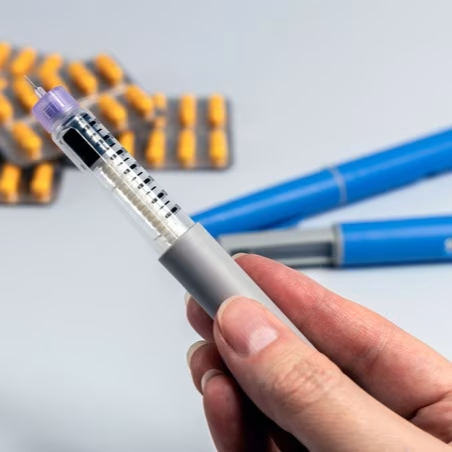
Both forms deliver the same active ingredient, but the way you take them and how the body absorbs them are very different, and those differences drive most of the choice between them.
Rybelsus (oral): daily, on an empty stomach
Rybelsus is a once-daily tablet, taken at least 30 minutes before the first food, drink, or other oral medication of the day, with no more than four ounces of plain water. The 30-minute empty-stomach window isn't optional — semaglutide is destroyed by stomach acid and food, and Rybelsus depends on an absorption enhancer (SNAC) to get across the stomach lining.
Standard titration:
3 mg daily for 30 days (initiation, not a therapeutic dose)
7 mg daily as the first maintenance dose
14 mg daily if further glucose control is needed
Ozempic and Wegovy (injectable): once weekly
Injectable semaglutide comes in prefilled pens and goes under the skin of the abdomen, thigh, or upper arm once a week. Rotating injection sites reduces local irritation. Storage is in the refrigerator until first use; after that, most pens are stable at room temperature for a limited window.
Ozempic titration: 0.25 mg weekly for 4 weeks (initiation), then 0.5 mg, then 1 mg or 2 mg if needed.
Wegovy titration: 0.25 mg → 0.5 mg → 1 mg → 1.7 mg → 2.4 mg, stepping up every four weeks.
The bioavailability gap
Injectable semaglutide gets more than 80 percent of the dose into circulation. Rybelsus gets about 1 percent. That's not a flaw in the tablet — it's just that swallowing peptides is inherently inefficient — but it explains why the tablet doses look so different from the injection doses and why the 30-minute rule matters. Miss the empty-stomach window, and even that 1 percent drops further.
Which is more convenient?
Depends on the patient. Weekly injections mean four dosing events a month instead of thirty, which most people find easier to sustain. Daily tablets appeal to people who won't inject or can't manage refrigerated storage. If your morning routine is already unpredictable, the 30-minute fasting window on Rybelsus can be a real friction point.
How well does Rybelsus work?
Rybelsus lowers HbA1c by roughly 1.0 to 1.4 percent at the 14 mg dose in clinical trials, with about half to two-thirds of patients hitting an HbA1c below 7 percent depending on the study population. Weight loss averages 4 to 6 percent of body weight, which is real but modest compared with what the injectable forms produce at higher doses.
The main appeal of Rybelsus is that it delivers most of the metabolic benefit of a GLP-1 without the injection. For patients with type 2 diabetes who are needle-averse or transitioning from oral hypoglycemics, it's often the natural first step in the GLP-1 class.
Side effects and how to handle them
Gastrointestinal symptoms — nausea, vomiting, diarrhea, constipation — affect roughly a third of patients, mostly in the first month or two. What actually helps:
Slow titration. Skipping a step up if you're struggling is fine and usually recommended.
Small, low-fat meals. Fat delays gastric emptying further, which piles onto the drug's effect.
Steady hydration, especially if constipation is the main problem.
Anti-nausea medication for a short window if nausea is intense during a titration step.
Most GI symptoms fade after a few weeks at a stable dose. The ones that don't fade, or that come on suddenly and severely, are worth calling your prescriber about.
Ozempic and Wegovy: what the injectable data show
Ozempic reduces HbA1c by up to about 1.8 percent at the 1 mg dose in the SUSTAIN trials, and the SUSTAIN-6 cardiovascular outcomes trial showed a 26 percent relative reduction in major adverse cardiovascular events (heart attack, stroke, cardiovascular death) in patients with type 2 diabetes and established cardiovascular disease.
Wegovy, at the 2.4 mg weekly dose, produced average weight loss of about 15 percent in the STEP-1 trial, with roughly a third of participants losing 20 percent or more. The SELECT trial extended the story to cardiovascular outcomes in non-diabetic patients with obesity and established heart disease, showing a 20 percent reduction in major adverse cardiovascular events.
These are the numbers that made semaglutide a category-defining drug for both diabetes and obesity, and they're the reason demand outstripped supply for most of 2022 through 2024.
Side effects specific to the injectable forms
The GI side effect profile is broadly similar to the oral form. What's added:
Injection site reactions — usually mild erythema, sometimes a small nodule.
Higher rates of nausea early in titration compared with lower-dose Rybelsus, largely because the target doses are higher.
The management strategies are the same: slow the titration, rotate injection sites, eat smaller lower-fat meals, treat symptoms early instead of waiting them out.
Rybelsus vs. Ozempic vs. Wegovy: the head-to-head picture
Feature | Rybelsus (oral) | Ozempic (injectable) | Wegovy (injectable) |
FDA-approved for | Type 2 diabetes | Type 2 diabetes, CV risk reduction | Chronic weight management, CV risk reduction |
Dosing | Once daily | Once weekly | Once weekly |
Target maintenance dose | 7–14 mg | 0.5–2 mg | 2.4 mg |
HbA1c reduction | 1.0–1.4% | 1.5–1.8% | Not the primary endpoint |
Average weight loss | 4–6% | ~6% at 1 mg | ~15% at 2.4 mg |
Cardiovascular data | None to date | 26% MACE reduction (SUSTAIN-6) | 20% MACE reduction (SELECT) |
Requires empty stomach | Yes, 30 min | No | No |
Refrigeration | No | Yes (until first use) | Yes (until first use) |
The short version: injectables win on efficacy, oral wins on convenience for needle-averse patients. Wegovy is the clear choice when weight loss is the primary goal. Ozempic is the workhorse for type 2 diabetes with or without cardiovascular disease. Rybelsus is the option for patients who won't inject.
What actually happened with compounded semaglutide
This section has changed more than any other since early 2025, and any article on semaglutide affordability that doesn't address it directly is going to mislead patients.
A quick timeline of what changed:
2022–2024: Semaglutide is on the FDA drug shortage list. Under federal compounding rules, that allowed 503A pharmacies and 503B outsourcing facilities to prepare compounded copies of Ozempic and Wegovy for U.S. patients, often at $150–$300 per month.
February 21, 2025: The FDA declared the semaglutide injection shortage resolved.
April 22, 2025: The enforcement discretion window for 503A compounding pharmacies ended.
May 22, 2025: The enforcement discretion window for 503B outsourcing facilities ended.
April 30, 2026: The FDA formally proposed removing semaglutide, tirzepatide, and liraglutide from the 503B bulks list, which would close the bulk-compounding pathway even if a future shortage were declared. A public comment period ran through June 29, 2026.
Where that leaves compounded semaglutide right now:
503B outsourcing facilities can no longer legally produce compounded semaglutide as an "essentially a copy" alternative to Ozempic or Wegovy.
503A pharmacies can still compound for narrow, patient-specific clinical needs — for example, a documented allergy to an inactive ingredient in the approved product — with a valid patient-specific prescription. This is not a pathway for mass-market cost savings.
Some compounded products have used salt forms of semaglutide (semaglutide sodium, semaglutide acetate). The FDA has stated there is no lawful basis for these salt forms in compounded drugs, and safety data on them is limited.
The FDA has documented hundreds of adverse event reports linked to compounded semaglutide, many involving dosing errors from multidose vials where patients drew up too much medication and required hospitalization.
The practical takeaway: if a website is offering "compounded semaglutide" to any U.S. patient without a documented individual clinical reason, that's a red flag in 2026. It doesn't automatically mean the product is unsafe, but the legal footing is shaky and the safety oversight is thinner than what you get with an FDA-approved product.
How to actually save on brand-name semaglutide
With the compounding pathway effectively closed for most patients, the realistic ways to reduce what you pay for semaglutide come down to four:
1. Manufacturer copay cards and patient assistance
Novo Nordisk offers copay assistance programs that can drop the out-of-pocket cost of Ozempic, Wegovy, or Rybelsus to as little as $25 a month for commercially insured patients who meet the eligibility criteria. For uninsured patients or those on Medicare, the NovoCare patient assistance foundation provides free medication for patients who qualify financially.
These programs have limits — annual caps, insurance requirements, and eligibility rules that exclude some patients — but they're the single biggest savings lever for people who qualify.
2. Insurance formulary and prior authorization
Coverage for GLP-1s varies wildly. Type 2 diabetes indications are more likely to be covered than obesity indications, and prior authorization is common. If your plan won't cover Wegovy for weight loss but will cover Ozempic for diabetes, and you have a diabetes diagnosis, that's a conversation worth having with your prescriber.
3. Canadian brand-name pricing
The same brand-name Ozempic, Wegovy, and Rybelsus sold in the U.S. is available in Canada at Canadian regulated pricing, which typically runs about a third of U.S. retail. This is the same pathway that works for other high-cost brand-name drugs: a valid U.S. prescription, an accredited Canadian online pharmacy, and personal-use import within the FDA's long-standing enforcement discretion for a 90-day supply.
Typical Canadian pricing for the branded products through licensed pharmacies:
Medication | U.S. list price (approx.) | Canadian brand-name price (approx.) | Monthly savings |
Rybelsus 14 mg | $900+ | $300–$400 | 55–65% |
Ozempic 1 mg/wk | $900+ | $250–$350 | 60–70% |
Wegovy 2.4 mg/wk | $1,350+ | $450–$600 | 55–65% |
These are the same manufacturer products in the same packaging, sold under Canadian pricing regulations. That's the sustainable savings model, and it doesn't depend on a shortage designation or a compounding loophole.
4. 90-day supplies
Dispensing fees and shipping are fixed per order. Ordering a 90-day supply instead of monthly refills spreads those fixed costs and usually qualifies for a small volume discount on top. For a chronic medication you'll be on for years, this is the easiest optimization available.
How to order semaglutide from a Canadian pharmacy safely
The process is straightforward, but the pharmacy has to be legitimate. What that means in practice:
CIPA accreditation (Canadian International Pharmacy Association) that verifies on the CIPA website
PharmacyChecker verification
A Health Canada licence number
A licensed pharmacist you can actually reach
A requirement for a valid U.S. prescription — no site that offers Ozempic or Wegovy without a prescription is legitimate
The ordering flow at PlanetDrugsDirect.com is the same as for any prescription drug: create a profile, submit a valid U.S. prescription (or have your doctor transfer it), wait for pharmacist review, pay, and track the shipment. Cold-chain shipping is required for the injectable forms and adds a small amount to the delivery cost. Most orders arrive within 10 to 14 days.
Managing semaglutide long-term
The GI side effects fade for most people within a couple of months. What matters more for long-term success is the pattern around the medication:
Regular follow-up with your prescriber to monitor HbA1c, weight, and any side effects
Dietary changes that support the drug's mechanism — smaller meals, less high-fat food, adequate protein to preserve lean mass during weight loss
Movement and resistance training, especially if weight loss is the goal, to protect muscle
A plan for what happens if you stop the medication. Weight regain after discontinuation is well-documented and largely mechanistic, so tapering and behavior change matter
Semaglutide works, but it works best as one part of a broader treatment plan, not as a standalone fix.
Rely on PlanetDrugsDirect.com to Buy Online Prescription Drugs
As a trusted prescription referral service, we offer important benefits whenever you order online. Each of our partner pharmacies and/or government-approved dispensaries is committed to providing the best experience possible of any online prescription referral service on the internet. We offer:
Low prices
Quick turn-around times
Generic and brand-name medications
Unparalleled customer service
Sources
Krajnc, M., Kuhar, N., & Koceva, A. (2025). Oral semaglutide for the treatment of obesity: a retrospective real-world study. Frontiers in Endocrinology, 16. https://www.frontiersin.org/journals/endocrinology/articles/10.3389/fendo.2025.1593334/full
Palazzi, S., Sentinelli, F., Zugaro, A., Morgante, S. N., Melanzi, S., Mutiis, A. D., Piersanti, D., Macerola, B., Iezzi, M., Mercuri, P., Tienforti, D., Cavallo, M. G., Barbonetti, A., & Baroni, M. G. (2025). Real-World Analysis of Short-Term Effectiveness of Oral Semaglutide: Impact on Glycometabolic Control and Cardiovascular Risk. Pharmaceuticals, 18(6), 856. https://www.mdpi.com/1424-8247/18/6/856
Plotkin, M., Ivkovic, M., Smith, I., Rathor, N., Chowdhury, R., Hodkinson, A., & Kushner, R. F. (2026). Semaglutide 25 mg Oral Versus Semaglutide 2.4 mg Injectable: An Indirect Treatment Comparison of Weight Loss Outcomes. Diabetes Obesity and Metabolism, 28(8), 7237–7246. https://dom-pubs.pericles-prod.literatumonline.com/doi/10.1111/dom.70911
Related Articles

Oral Semaglutide (Rybelsus): A Practical Guide to Dosage, Benefits, and Safety
Oral semaglutide marks a major step forward for GLP-1 therapy, bringing a once-injectable option into a daily pill that many people with type 2 diabetes and weight concerns...

Contrave vs. Ozempic: Comparison
Ozempic (semaglutide) is a GLP-1 injection that helps to treat Type 2 diabetes. Much of the “Ozempic craze” has come from patients who have noticed that Ozempic does a tremendous job with weight loss. In...

All Ozempic Alternatives for Weight Loss (Guide)
The most common alternatives to Ozempic include Wegovy, Rybelsus, Saxenda, Mounjaro, Trulicity, and Metformin. Each of these alternatives can be broken down into a number of categories that can help you...